 ®
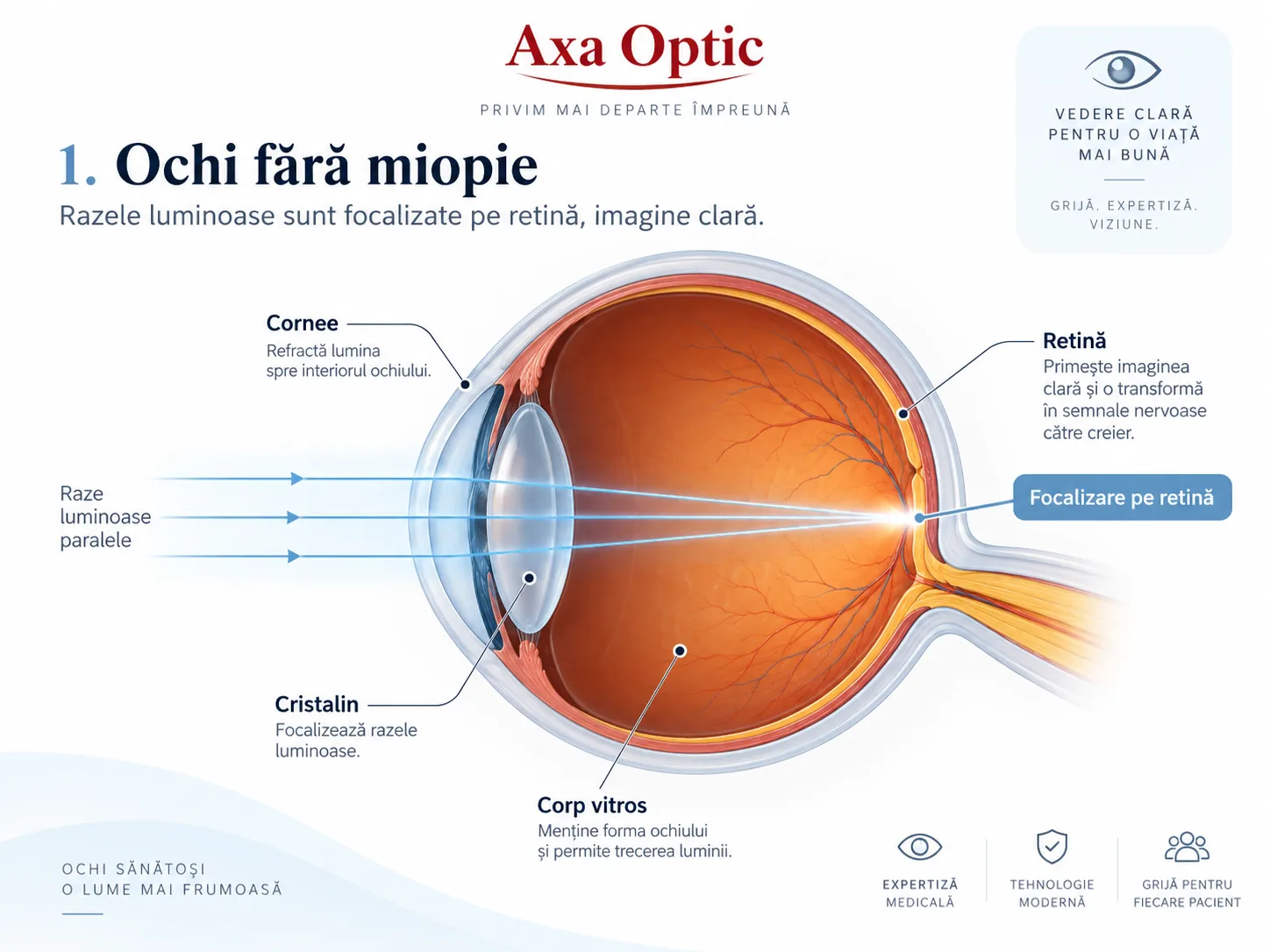
Eye without myopia
Light focuses on the retina, producing a clear image.
Pediatric myopia · assessment and monitoring
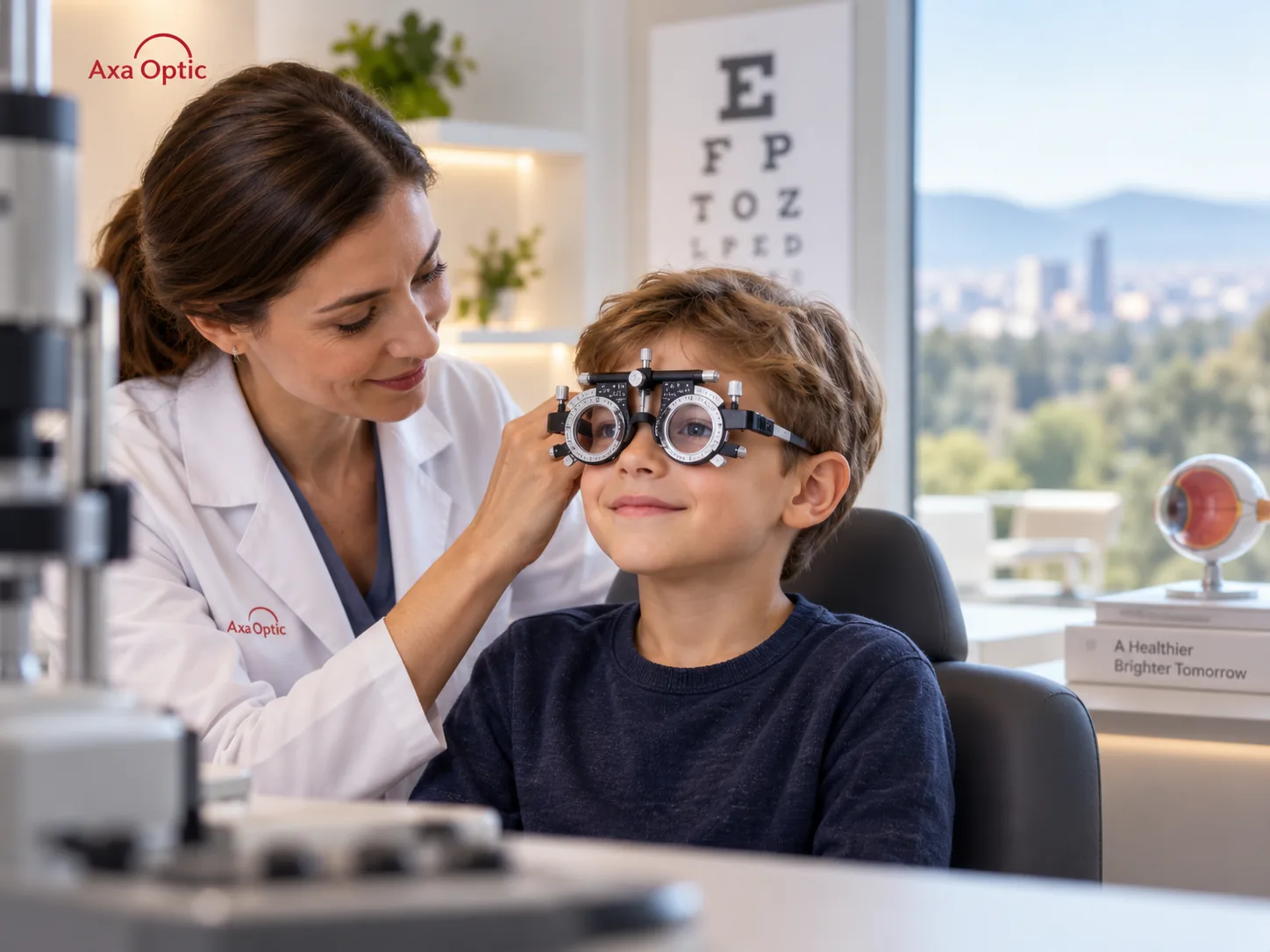
Pediatric myopia management includes correction of refractive error and, when clinically indicated, evidence-based interventions to slow refractive progression and/or axial elongation. At Axa Optic® Clinic in Bârlad, children with myopia are assessed by an ophthalmologist; evaluation may include ocular biometry to measure axial length. Regular monitoring helps tailor the progression-control strategy to each child.
01 · Understanding myopia
Myopia (nearsightedness) is a refractive error that makes distant objects appear blurred. In children, myopia may change as the eye grows.
Light focuses on the retina, producing a clear image.
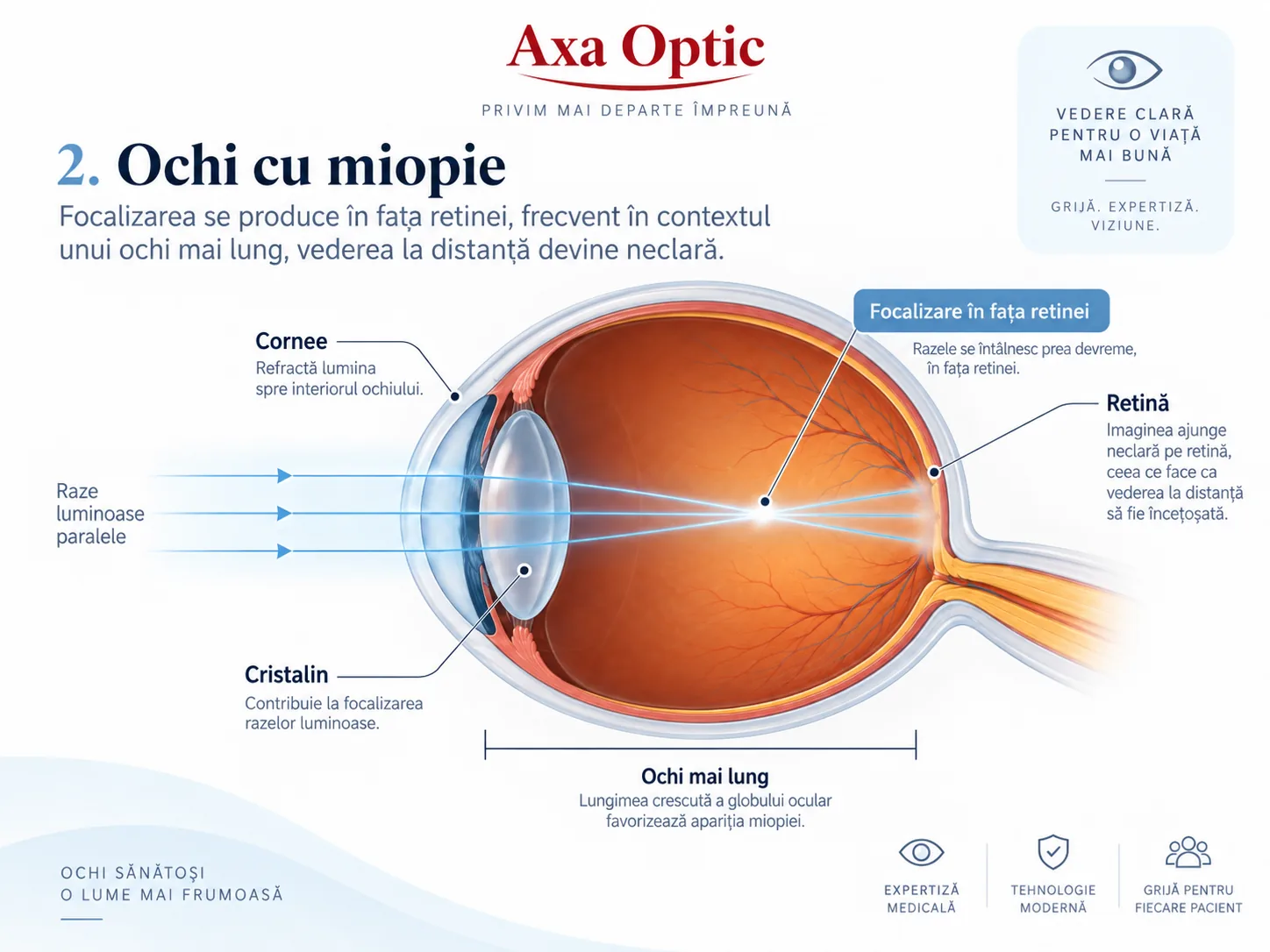
Light focuses in front of the retina, often because the eye is longer, making distance vision blurred.
02 · Illustrative simulator
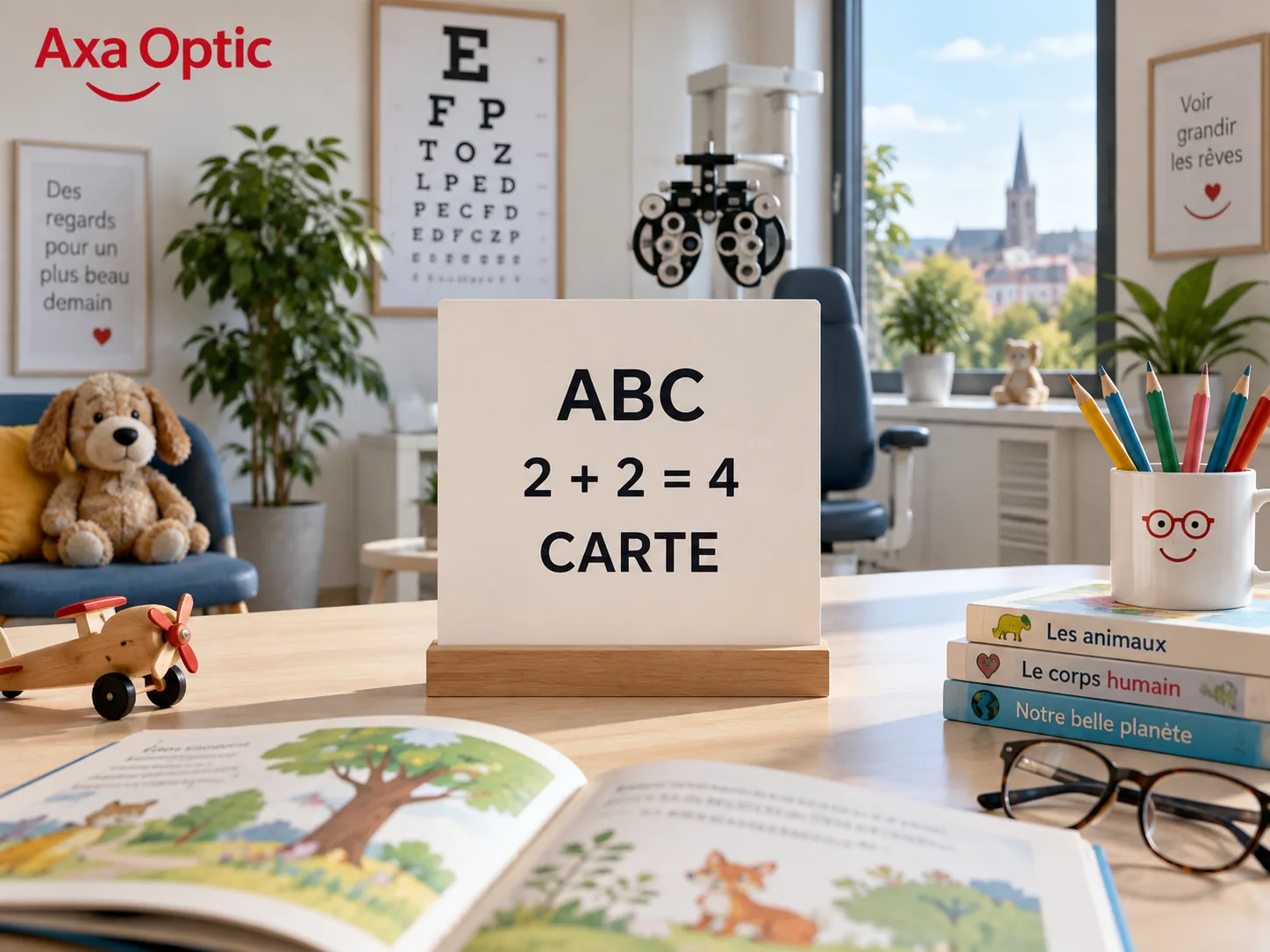
Selecting a value illustrates how distance-image clarity may change. The simulation does not reproduce an individual’s exact visual experience.
 Simulator
For illustration only. Actual visual perception varies between individuals.
03 · Myopia in childhood
Myopia can begin in childhood and progress during the growing years. Earlier onset generally allows a longer period during which progression may occur.
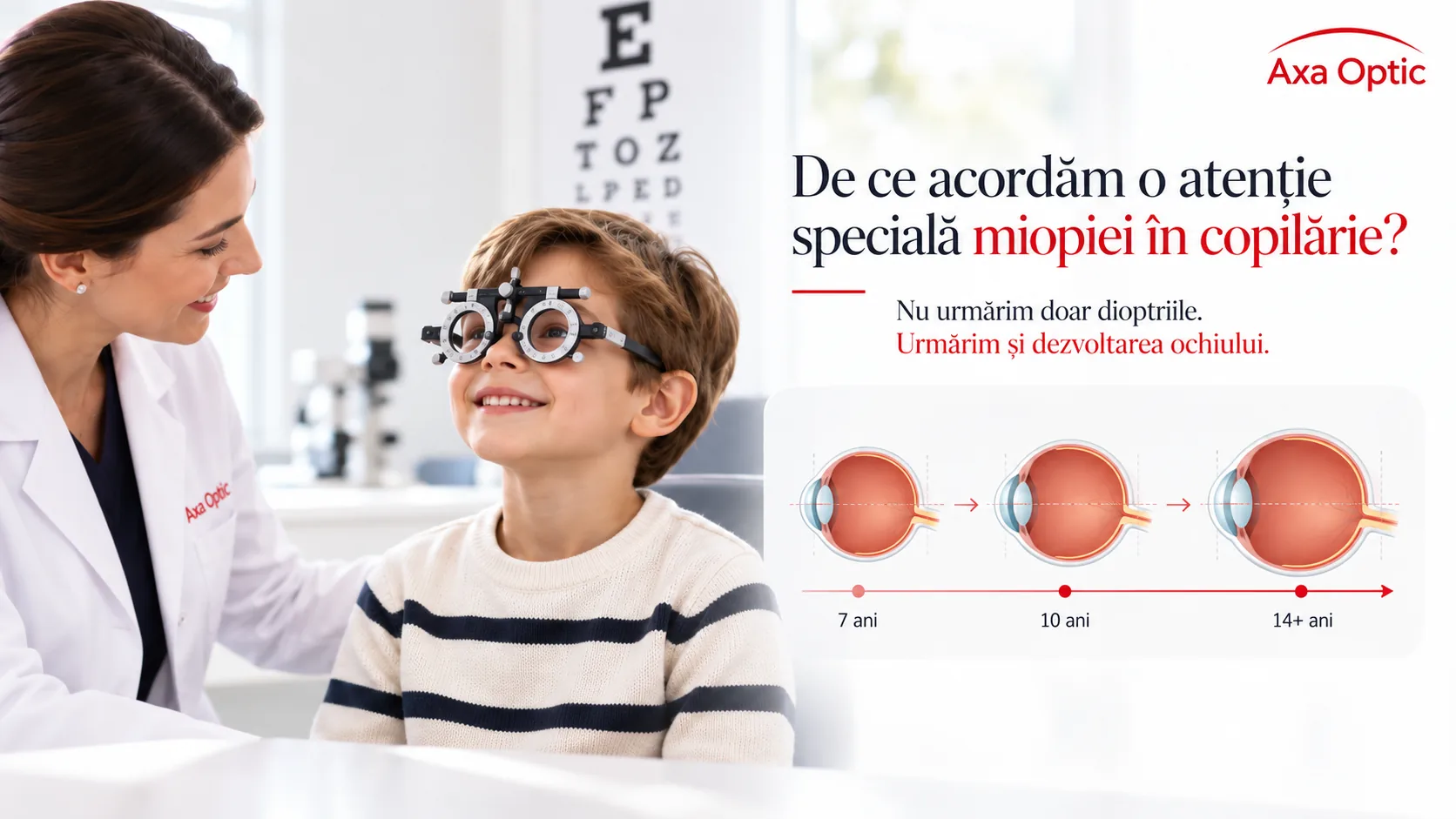
Axial lengthAxial length is the distance between the front and back of the eye. Faster axial elongation may accompany myopia progression.
04 · Myopia-control spectacle lenses
Myopia-control spectacle lenses have two distinct goals: correcting vision and using an optical design intended to slow myopia progression. Technologies differ in geometry and optical mechanism. Selection is individualized after an ophthalmic examination, assessment of progression and the measurements needed for accurate lens centration.
Commercial example: HOYA MiYOSMART. A central distance-correction zone is surrounded by multiple positive-power segments that simultaneously provide clear vision and myopic defocus. The segments in the DIMS clinical trial had a power of +3.50 D.
In a two-year randomized trial involving children aged 8–13, myopia progression was 52% slower and axial elongation 62% lower than with single-vision lenses. Study findings do not guarantee the same response for every child.
Commercial example: ZEISS MyoCare. The clear central zone is surrounded by a treatment area with cylindrical refractive elements arranged in concentric rings. In the multicenter CARE trial, the tested design had a 7 mm central zone and a mean element power of +4.6 D.
At 24 months, the randomized study reported approximately 0.44 D less progression and 0.20 mm less axial elongation compared with single-vision lenses. A two-year European study also found reduced refractive progression and axial elongation.
Commercial example: Essilor Stellest. Highly aspherical lenslets are distributed in concentric zones around a clear central viewing area. The design aims to create a volume of myopic defocus in front of the retina while maintaining central optical correction.
In the two-year randomized trial, highly aspherical lenslet spectacles reduced progression by a mean difference of 0.80 D and axial elongation by 0.35 mm compared with single-vision lenses. Greater effectiveness was observed in children who wore the lenses longer.
The percentages and differences above come from clinical studies of groups of children and are not individual guarantees. Response depends on age, progression rate, wearing time, biometric profile and other factors. Axa Optic® MyopiaTrack Junior monitors both refraction and axial length to assess each child's response.
International Myopia Institute (IMI). Myopia Correction, Myopia Control and Myopia Management: Definitions and Recommended Usage. 2025.
International Myopia Institute (IMI). IMI 2025 Digest.
Lam CSY et al. Defocus Incorporated Multiple Segments (DIMS) spectacle lenses slow myopia progression: a 2-year randomised clinical trial. Br J Ophthalmol. 2020. PubMed
Chen X et al. Efficacy of Cylindrical Annular Refractive Elements (CARE) Spectacle Lenses in Slowing Myopia Progression Over 2 Years. Am J Ophthalmol. 2025. PubMed
Alvarez-Peregrina C et al. Two-Year Efficacy of Cylindrical Annular Refractive Elements Spectacle Lenses for Myopia Control in European Children. Ophthalmology Science. 2026. PubMed
Bao J et al. Spectacle Lenses With Aspherical Lenslets for Myopia Control vs Single-Vision Spectacle Lenses: A Randomized Clinical Trial. JAMA Ophthalmol. 2022. PubMed
Gupta V et al. Comparative evaluation of DIMS, HALT and CARE spectacle designs. Ophthalmic Physiol Opt. 2025. PubMed
05 · Pediatric myopia management
The initial assessment establishes baseline measurements and a progression profile. When indicated, evidence-based myopia-control interventions may be used; effectiveness is monitored through refraction and axial-length measurements.
The protocol includes baseline assessment, selection of an intervention when indicated, regular monitoring of refraction and axial length, and reassessment of the strategy based on progress.
Children enrolled in the program receive a preferential rate for the six-month follow-up. The ophthalmologist may recommend an earlier review if the progression rate or risk profile warrants it.
For children enrolled in the program, regular follow-up visits cost less than the initial assessment. Spectacle lenses and frames are charged separately according to the optical solution selected.
The standard proposed review interval is six months; the ophthalmologist may recommend an earlier visit when the risk profile or progression rate justifies it.Myopia management does not guarantee that progression will stop and is not a cure for myopia. Control interventions aim to reduce the rate of refractive progression and/or axial elongation. Response varies by individual and requires regular monitoring.
06 · Comprehensive assessment
* when available and clinically indicated.
The ophthalmologist considers the child's age, onset of myopia, family history, changes in refraction, ocular biometry and relevant behavioral factors together.
07 · Monitoring
MyopiaTrack Junior compares successive refraction and axial-length measurements to estimate progression and assess the response to the selected management strategy.
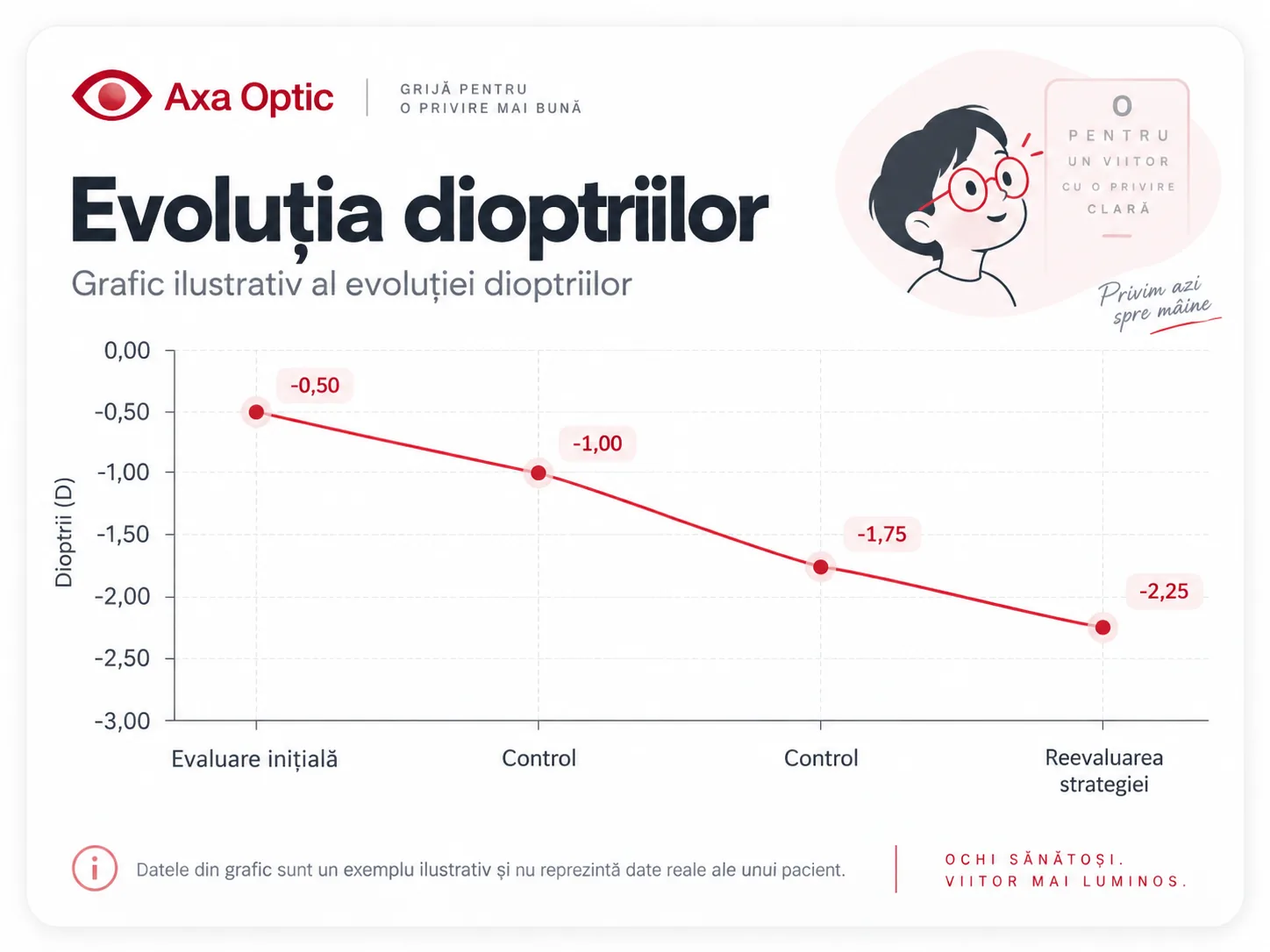
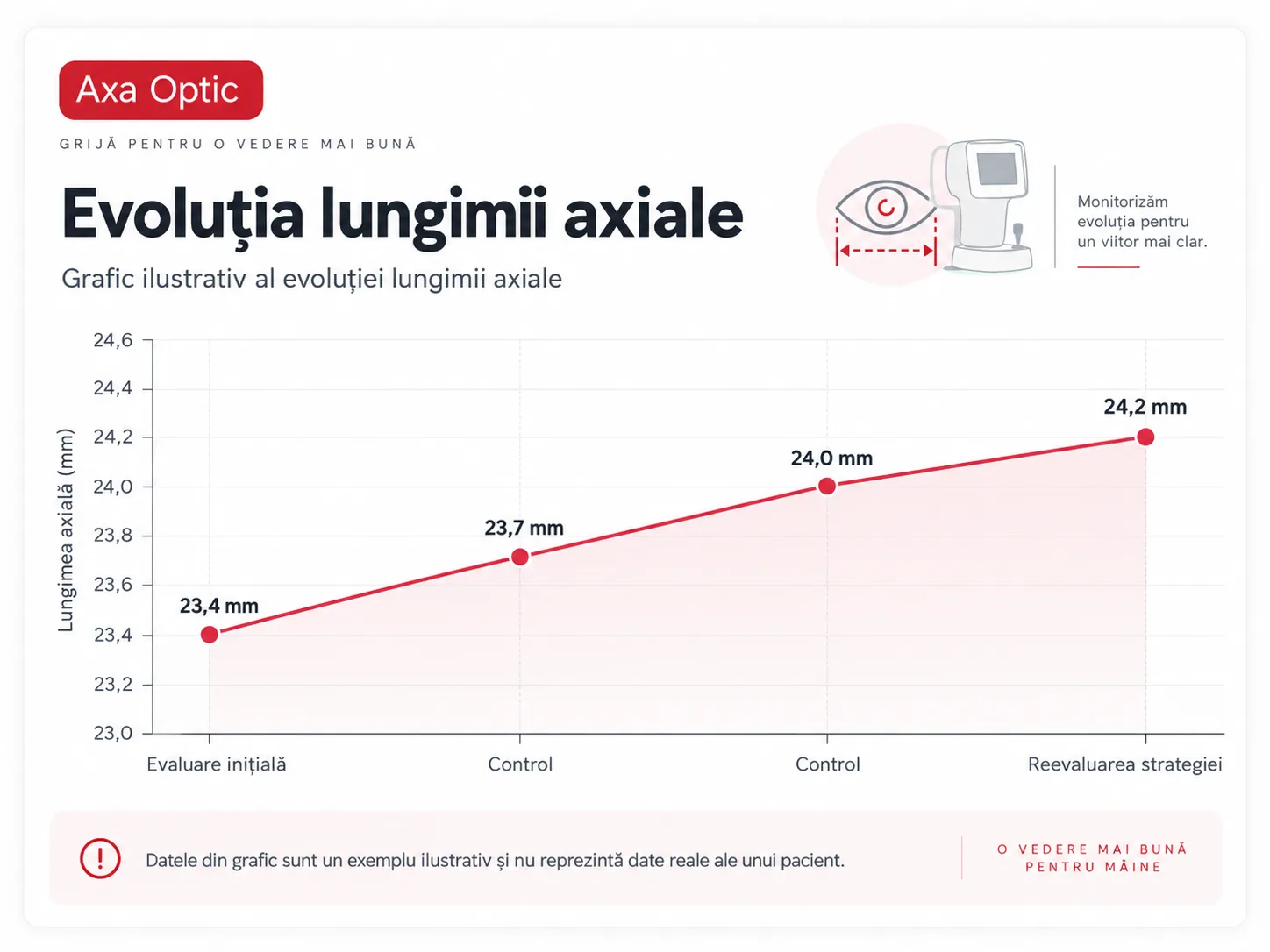
The values above are illustrative examples and do not represent actual patient data.
08 · Individualized plan
The initial assessment establishes baseline measurements and the progression rate. When indicated, a myopia-control intervention is selected, and the response is assessed at regular follow-up visits.
This information is educational and does not replace an ophthalmic consultation. Myopia-control recommendations are individualized following a medical assessment.